

BELAN Automation: Boost Your Production Efficiency With Optimized Auxiliary Feeding for Copper‑aluminum Busbar Bender
Why Auxiliary Feeding Device Matters for Copper‑aluminum Busbar Bender
In new‑energy vehicles, high‑voltage distribution cabinets, energy‑storage systems and electrical equipment manufacturing, copper and aluminum busbars come in a wide range of specifications. Factories frequently switch materials with different widths, thicknesses or lengths according to orders, so material‑changing speed has become a key factor limiting overall production output.
Many buyers of copper‑aluminum busbar bender focus heavily on bending‑angle precision, servo‑axis quantity and processing range. However, they often overlook a simple yet vital mechanical component: the auxiliary feeding device.
Once one batch of busbar workpieces is finished, fast, stable feeding of new raw material into the straightening and feeding zone directly determines change‑over time, operator manpower requirements and material scrap rate. Therefore, besides evaluating core bending performance, the auxiliary feeding structure should be included in your full assessment checklist during equipment selection.
Practical Differences Between Various Auxiliary Feeding Structures
Currently available copper‑aluminum busbar bender models on the market show major differences in feeding configurations. Taking BELAN equipment as a reference solution, operating workflows vary greatly from brand to brand.
1. BELAN: Auxiliary Feeding Device Reduces Change‑over Difficulty
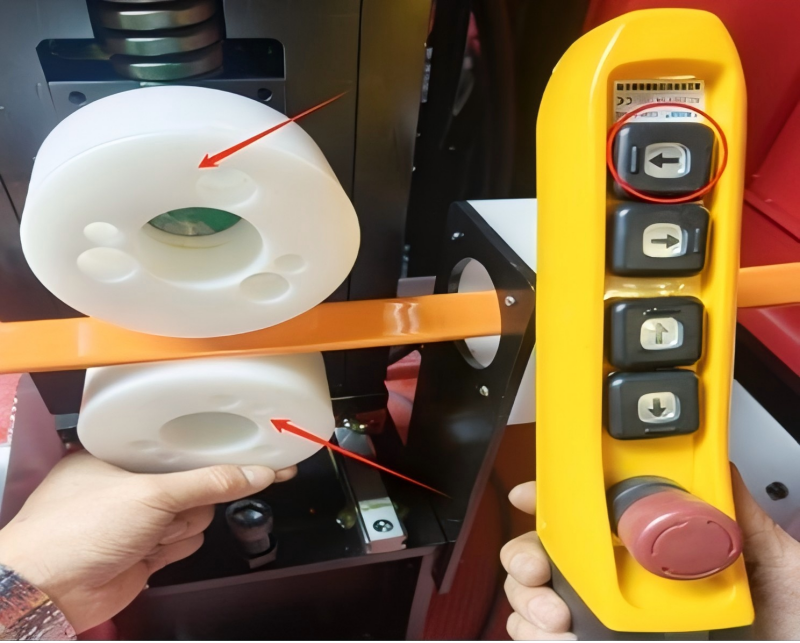
BELAN machines are factory‑equipped with a dedicated auxiliary feeding unit. When new copper or aluminum busbars need loading, operators simply pull the workpiece to the feeding station and press the start button. The machine automatically transports raw material into the straightening zone.
The biggest advantage is that operators no longer need to loosen the straightening rollers during material replacement. On conventional equipment, workers have to release the straightening assembly, manually push the busbar into position, then reset and recalibrate the rollers again.
The simplified workflow of BELAN auxiliary feeding: Load material → Pull into position → Press feeding switch → Automatic feeding → Straightening → Start production. The whole material‑changing procedure can be completed by one‑single operator.
2. Units Without Auxiliary Feeding: Extra‑Intensive Manual Operations
Several busbar bending machine brands such as Yonglian do not integrate an auxiliary feeding structure. Operators must manually push long busbars deep into the feeding zone. Alternatively, workers loosen straightening rollers, feed the workpiece, then readjust the whole straightening system afterwards.
While this workflow can finish material replacement, it creates multiple hidden drawbacks in mass production. Feeding long workpieces requires extra‑large operating space and higher physical labor. After resetting straightening rollers, re‑calibration is required. Improper adjustment may lead to unstable feeding and inconsistent finished dimensions. Over repeated production cycles, these extra steps accumulate into substantial time‑cost losses.
Production Pain‑Points Solved by Auxiliary Feeding Device
1. Shorter material‑changing cycle
For factories with frequent product switches, real production efficiency depends not only on single‑piece bending speed, but also on loading, unloading and debugging downtime. The auxiliary feeding unit streamlines material‑in procedures and creates continuous workflow.
2. Lower manpower requirements
Long, heavy copper‑aluminum busbars usually require two‑person teamwork on traditional machines: one operator feeds raw material while the second adjusts machine settings. An auxiliary feeding system enables one‑operator change‑over and cuts labor expenses.
3. Less raw‑material waste
Frequently loosening and recalibrating straightening rollers often leads to repeated test runs and wasted high‑value copper‑aluminum stock. Optimized auxiliary feeding reduces unnecessary adjustments and controls material‑use costs.
4. Improved operating convenience
Long‑term practical usability of a copper‑aluminum busbar bender relies heavily on daily workflow comfort. Although it counts as an accessory component, the auxiliary feeding device greatly affects human‑machine interaction, change‑over efficiency and overall operating experience.
Do Not Judge Busbar Bender Only By Core Technical Parameters
Procurement teams comparing different brands of copper‑aluminum busbar bender are advised to look beyond simple specifications such as axis quantity, motor power or maximum workpiece size. A full production workflow includes: Raw‑material loading → Auxiliary feeding → Straightening → Automatic feed → Positioning → Bending → Finished‑part unloading.
Any bottleneck along this chain can drag down your whole‑line productivity. New‑energy vehicle and energy‑storage busbar projects are typically multi‑spec, small‑batch orders requiring frequent change‑overs, so change‑over and debugging downtime heavily influence overall equipment effectiveness.
When contacting suppliers, ask the following practical‑operation questions:
- Does this copper‑aluminum busbar bender come with an auxiliary feeding device?
- Is loosening of straightening rollers required during material‑changing?
- Can one single‑operator finish the whole change‑over workflow?
- Can long‑size busbars be smoothly loaded into the feeding zone?
- Does re‑straightening calibration become necessary after material‑replacement?
- Is the auxiliary feeding mechanism compatible with multiple busbar specifications?
BELAN Auxiliary‑Feeding Solution Optimized for High‑Frequency Change‑over
For factories with continuously‑changing workpiece specifications, machine value comes not just from bending precision, but also from minimized non‑productive downtime. BELAN simplifies change‑over steps by adding the auxiliary feeding unit. Operators pull raw material into feeding station and trigger automatic loading, eliminating manual pushing and roller recalibration work.
This configuration perfectly matches new‑energy vehicle busbars, energy‑storage components and electrical cabinet parts with frequent‑switch production schedules. Accumulated savings on labor cost and change‑over time deliver long‑term productivity advantages for mass production.
How To Select The Right Copper‑aluminum Busbar Bender
Auxiliary feeding represents only one evaluation item. Your final equipment decision should combine busbar width, thickness, material hardness, workpiece geometry, bending angles, processing length, output targets and automation‑level requirements.
Auxiliary feeding devices bring far‑greater benefits for production lines with frequent material‑switching. If you manufacture single‑specification high‑volume parts, prioritize continuous‑running efficiency and automation functions instead. Do not select your copper‑aluminum busbar bender purely according to specification sheets. Request sample testing and process evaluation from suppliers using your real‑world busbar drawings.
Conclusion: Auxiliary‑Accessory Structures Add Core Machine Competitiveness
Long‑term production satisfaction of your copper‑aluminum busbar bender is determined not only by the main bending system, but also by feeding, straightening, change‑over workflows and daily usability details. BELAN auxiliary feeding system simplifies raw‑material loading, removes repeated roller‑loosening work, enables single‑operator change‑over, cuts debugging time and reduces copper‑aluminum scrap loss.
BELAN Machinery provides professional metal wire‑forming and busbar‑processing solutions. If you are comparing multiple brands of copper‑aluminum busbar bender or want customized equipment recommendations based on your busbar drawings, material specifications and production capacity, please contact our technical team. Send us your workpiece drawings, busbar dimensions, material type and target output, and we will suggest the best‑matched machine configuration and feeding scheme for your process.
.jpg)