
Copper‑Aluminum Busbar Bender Selection Comparison Series Part 5: How Does Control System Affect Equipment Stability?
Why Focus on Control System for Copper‑Aluminum Busbar Bending Machine?
When selecting copper and aluminum busbar processing equipment, many purchasers first pay attention to processing range, bending accuracy, servo motor quantity and mechanical structure, yet easily overlook the underlying control system.
In fact, for complex products such as new‑energy vehicle copper busbars, energy‑storage busbars and high‑voltage cabinet busbars, equipment needs to complete feeding, positioning, bending, rotation, clamping and multi‑axis linkage movements. All these actions are coordinated by the control system.
Therefore, long‑term stable operation of equipment depends not only on mechanical structures and electrical components, but also on software stability, program logic, fault‑handling capability and follow‑up maintenance of the Copper‑Aluminum Busbar Bender control system.
Especially during continuous production, software bugs, program exceptions or control‑logic defects may trigger machine shutdown even with perfectly sound mechanical hardware. Thus, system supply mode deserves key comparison during Copper‑Aluminum Busbar Bender selection.
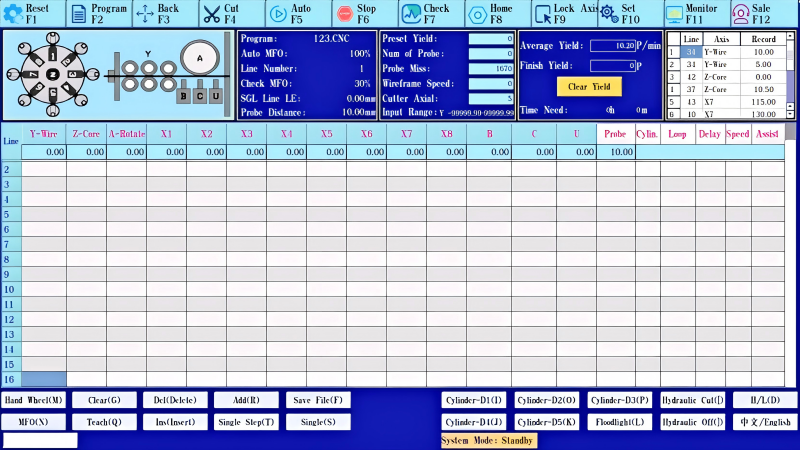
Control System of Copper‑Aluminum Busbar Bending Machine
Difference Between Professional Third‑party System & Self‑developed System
Currently there are two mainstream control‑system solutions for busbar processing equipment: systems supplied by professional system vendors, and self‑developed systems completed by machinery manufacturers. Neither solution is absolutely superior. Performance relies on R&D capacity, team scale, maintenance mechanism and practical field experience.
Belan and other brands adopt different system supply modes with obvious practical distinctions.
1. Professional Third‑party Supplied System: High Stability & Reliable Maintenance
Belan copper‑aluminum busbar bending machine adopts control systems from professional automation vendors. These suppliers specialize in industrial motion control and CNC software, owning dedicated teams for system architecture, stress testing, stability optimization and bug remediation.
Once software defects occur, professional teams can analyze, locate and repair faults timely. Industrial equipment faces varying working conditions, product programs and operator demands throughout its service life. Complete system maintenance mechanisms effectively lower shutdown risks caused by software failures for new‑energy busbar processing equipment.
2. Self‑developed System: High Flexibility While Restricted by In‑house R&D Strength
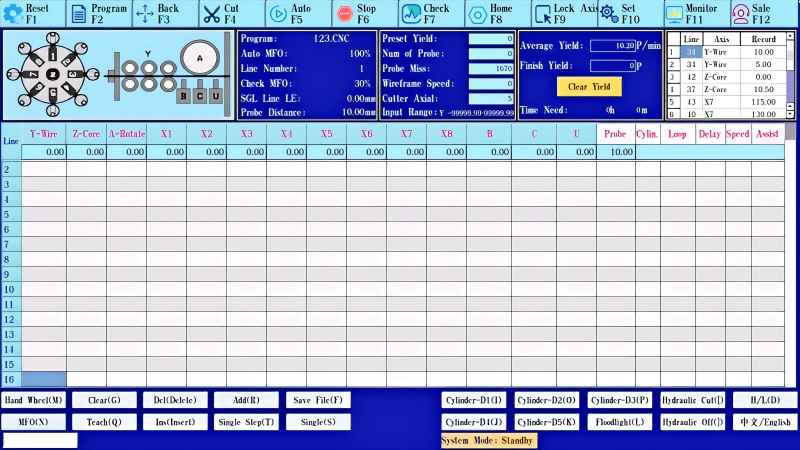
Some equipment manufacturers deploy self‑developed control systems. The primary merit lies in targeted customization matched with local mechanical structures: custom HMI interface, personalized processing workflow, optimized control logic, fast feature addition and on‑demand software adjustment for clients.
Self‑developed systems can deliver decent performance if supported by strong motion‑control R&D teams. Nevertheless, buyers shall verify post‑fault maintenance capacity. Limited in‑house software manpower may result in slow troubleshooting for complex bugs, compatibility conflicts or long‑run runtime anomalies.
When choosing self‑developed‑system machines, do not judge merely by the label “self‑developed”. Evaluate manufacturer’s software R&D competence and after‑sales response mechanism comprehensively.
How Control‑system Stability Directly Influences Production Efficiency
1. System anomalies may trigger full‑machine shutdown
Busbar processing requires multi‑axis coordinated movements. Complex spatial bending demands feeding axis, rotating axis and bending axis executing sequential motions following preset programs. Control‑system failures halt the whole processing workflow.
For mass‑production factories, system faults cause equipment standstill, delayed orders, idle labor, disrupted production schedules and extra material waste. Hence control‑system stability constitutes core equipment reliability.
2. Bug‑resolving speed counts heavily
Software issues after years of operation do not equal poor system design. What matters is rapid troubleshooting capacity. Professional system teams maintain complete workflows for feedback, bug tracking, version iteration and upgrades.
During procurement, besides checking system brand, raise practical questions: Who takes charge of bug fixing? Are software upgrades free? Is remote technical support available? What is the guaranteed response time for anomalies?
Self‑developed Or Professional System: How To Choose?
Pick professional third‑party system for proven stability: Prioritize mature third‑party systems if continuous long‑hour production is your top requirement. Widely deployed within industrial scenarios, they fit new‑energy vehicle, energy‑storage and electrical‑equipment manufacturers running heavy‑duty shifts.
Pick self‑developed system for deep customization demands: Self‑developed solutions provide higher flexibility for highly‑specialized products, on premise that the builder owns a solid software R&D team. Verify R&D headcount, independent motion‑control engineers, field installation volume, years of system deployment, update frequency, remote‑diagnosis function and sustainable after‑sales support. Do not over‑value the “self‑developed” tag alone.
Other Critical Functions for Busbar Bender Control System
1. Multi‑axis linkage performance: Reliable coordinated motion for multi‑direction complex busbar forming; higher axis quantity does not guarantee better output, stable synchronization is essential.
2. Program editing & management: Intuitive creation, modification, saving and recalling of processing programs, cutting operator learning cost for frequent product change‑over.
3. Parameter tuning function: Convenient adjustment for bending angle, feeding length and processing speed to accelerate new‑product trial runs.
4. Intelligent fault diagnosis: Clear alarm messages indicating abnormal axis, root cause and suggested inspection points to speed‑up on‑site troubleshooting.
5. Remote maintenance & over‑the‑air upgrade: Highly valuable for exported machines, reducing expensive overseas on‑site service trips and production downtime.
Control System Cannot Be Isolated From Mechanical Hardware
Final machine performance is jointly determined by mechanical structure, servo hardware, Copper‑Aluminum Busbar Bender control system, software algorithm and processing craftsmanship. Advanced software cannot fully compensate mechanical clearance defects. Conversely, premium mechanical hardware cannot deliver qualified output with poor linkage algorithm or unstable control logic.
Request real‑sample processing test from vendors during evaluation rather than judging purely from specification sheets.
Practical Tests To Evaluate Control‑system Maturity On‑site
1. Continuous running test: Observe crash, lagging or random alarms under long‑cycle repeated production.
2. Program calling test: Verify convenient saving, loading and editing for multiple different product recipes.
3. Parameter adjustment test: Evaluate usability when modifying feeding distance, bending angle and running speed.
4. Safe fault simulation test: Check whether alarm reports pinpoint real root causes accurately.
5. After‑sales workflow inquiry: Confirm remote support policy, software‑upgrade terms and engineer response SLA.
These hands‑on tests provide more valid reference than simply asking whether a system is self‑developed.
Belang’s Perspective On Busbar Equipment System Stability
For industrial automation machinery, the core value of control systems lies in securing long‑term dependable production tasks, especially for multi‑spec, high‑precision new‑energy busbar processing equipment components for EV and energy‑storage sectors.
Belang focuses on holistic matching of mechanics, electrics, motion control and software instead of only chasing hardware parameters. The real evaluation criteria are system maturity, machine stability, fast fault resolution capability and sustainable maintenance & upgrade support, rather than simply labeling “outsourced” or “self‑developed”.
Conclusion: System Stability Determines Long‑run Production Capacity
The control system constitutes an indispensable part of Copper‑Aluminum Busbar Bender. Third‑party professional systems bring mature development frameworks and dedicated maintenance teams. Self‑developed systems deliver higher customization flexibility yet demand strict assessment on manufacturer’s software R&D strength and long‑term service capacity.
Avoid one‑sided stereotypes for either solution. Make comprehensive judgment covering stability, practical functions, debugging friendliness, fault diagnosis, remote service, software iteration and long‑term maintainability.
Belan Machinery provides professional automotive wire‑forming solutions. If you are sourcing busbar bending machines for new‑energy vehicles, energy‑storage systems or high‑voltage cabinets, please contact Belang technical team. Submit your product drawings, busbar dimensions, processing requirements and output targets, we will deliver customized machine selection, system configuration and complete processing proposals.
.jpg)