
Technical Analysis of copper‑aluminum busbar bending machine: Belan BL‑TP Series 3D Full‑Servo Intelligent Solution for Higher Efficiency, Precision & Automation of New‑Energy Busbar Processing
Why New Forming Logic Is Required for New‑Energy Busbar Processing
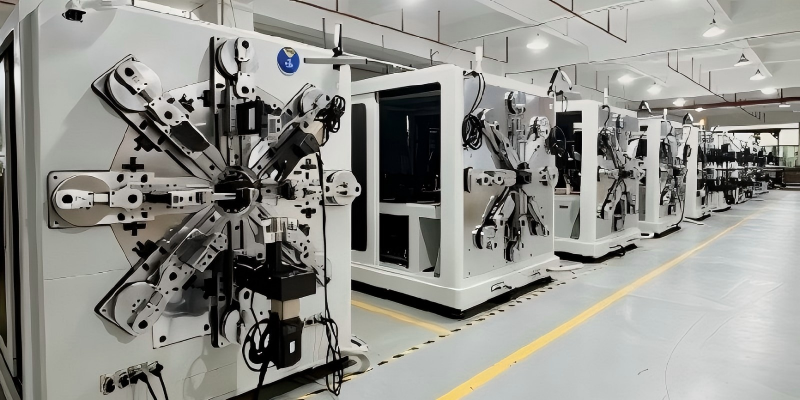
New‑energy power batteries, energy‑storage systems and photovoltaic inverters keep advancing toward high‑power density and compact structures. Copper‑aluminum busbars have evolved from simple flat connectors into precision conductive components requiring multi‑direction spatial forming. For manufacturers, protecting coated insulation layers, stably producing complex 3D structures and cutting change‑over & manual operation time are critical topics for automatic busbar production. Belan Automation BL‑TP series copper‑aluminum busbar bending machine applies proven wire 3D forming concepts to busbar manufacturing. Equipped with caterpillar‑type feeding, 13‑axis full‑servo linkage and rotary forming, it delivers continuous processing solutions for new‑energy industries. For factories upgrading busbar automatic lines, this copper‑aluminum busbar bending machine optimizes the whole workflow instead of focusing merely on single bending actions.
Traditional fixed bending machines are designed for single bending operations. When parts contain flat bending, vertical bending, twisting and multi‑angle spatial profiles, operators have to flip, re‑position and re‑clamp workpieces repeatedly.
For multi‑variety small‑batch orders from new‑energy vehicle and energy‑storage sectors, such workflow slows production tact and introduces dimensional deviations caused by manual positioning.
Meanwhile, many new‑energy copper‑aluminum busbars come with film‑covered, coated or extruded insulation layers. Over‑concentrated clamping pressure may cause indentation and deformation, even destroy insulation integrity.
Therefore, automatic new‑energy busbar manufacturing must solve two core challenges:
How to boost forming efficiency for complex spatial structures?
How to guarantee stable feeding without damaging insulation layers?
Caterpillar‑Type Feeding: Stable Feeding With Insulation Protection
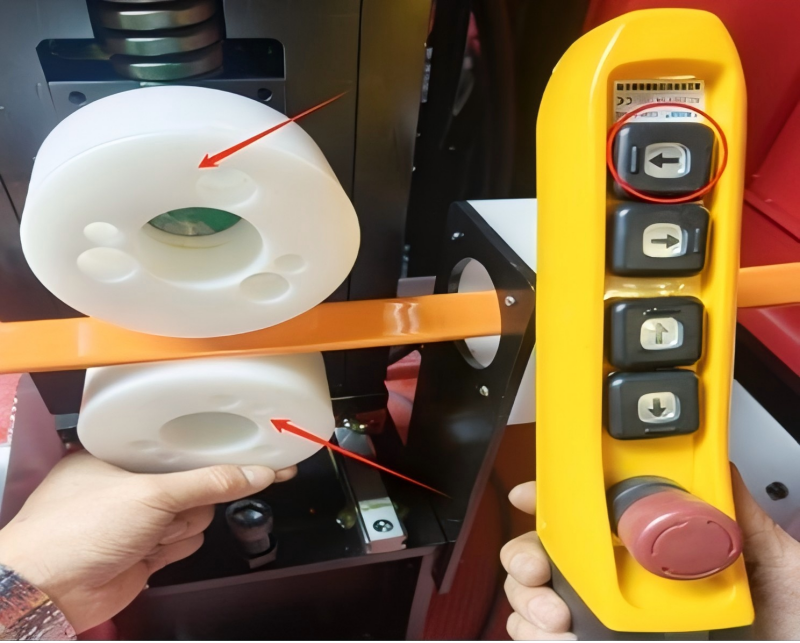
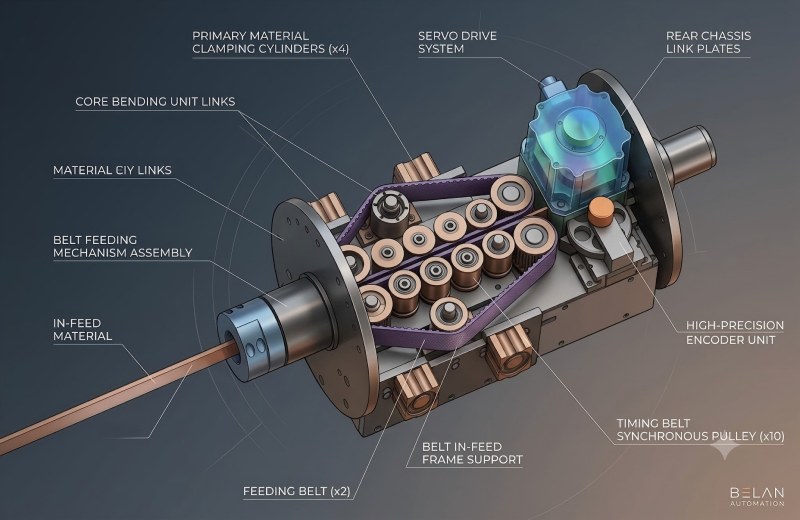
Targeting processing features of coated & insulated busbars, BL‑TP series adopts caterpillar‑type feeding structure. Larger contact area disperses clamping pressure, and coated contact components deliver even force distribution during material feeding.
Minimize surface damage during feeding
Compared with conventional roller feeding with limited contact area, caterpillar‑type design avoids local pressure concentration. It fits continuous automatic production for busbars with strict surface quality and insulation‑integrity requirements.
BL‑TP series handles thin‑wall busbars of 2‑7 mm thickness and 8‑50 mm width. Encoder‑controlled feeding improves length consistency. Feeding pressure is adjustable for different material specifications, reducing downtime from frequent feeding‑part replacement. This brings practical value for manufacturers producing diversified battery‑pack, energy‑storage and inverter products.
3D Rotary Forming: From Single Bending to Continuous Spatial Forming
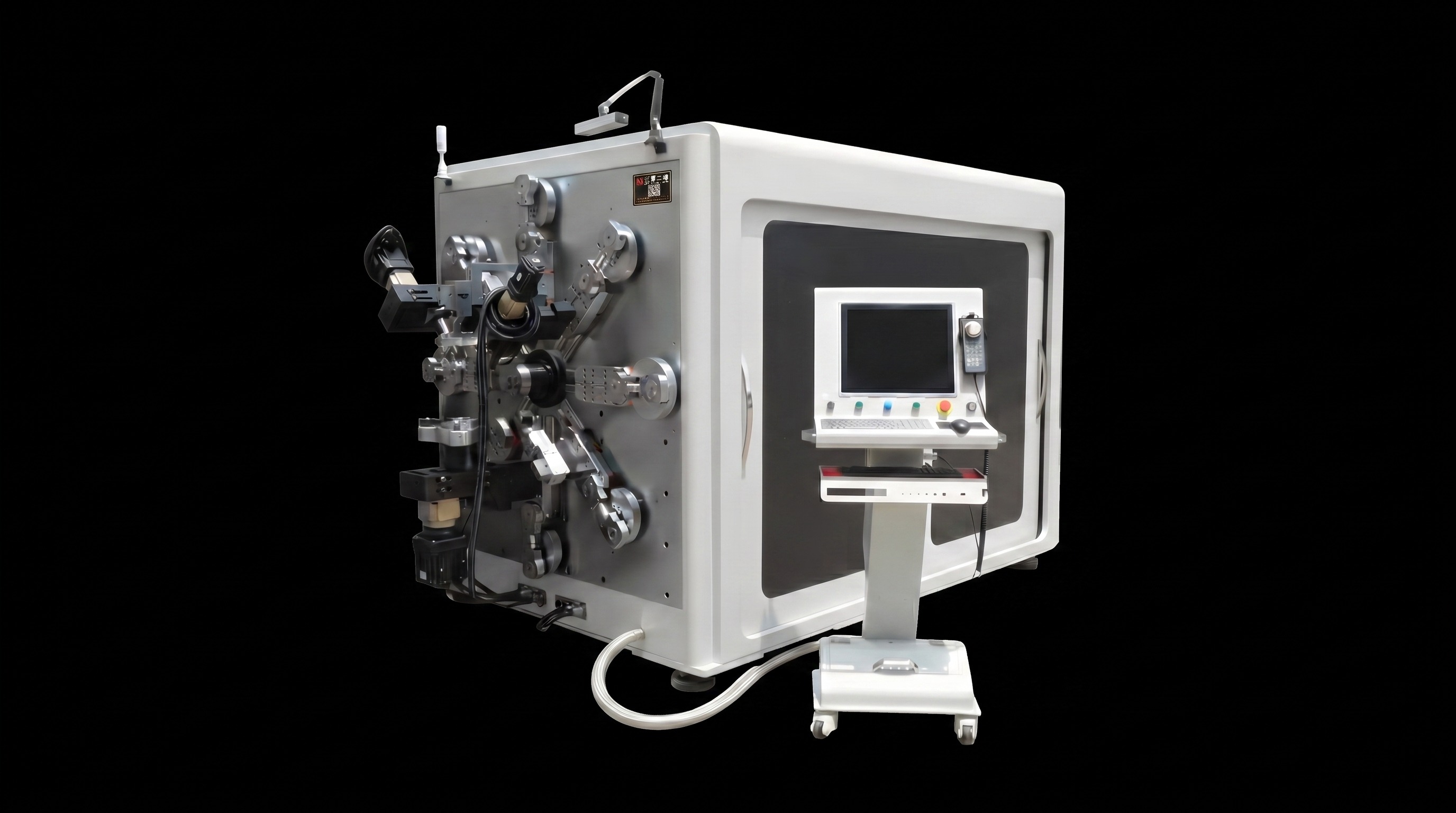
Another core technology of BL‑TP series is introducing mature wire rotary forming into busbar production. The machine uses central rotary forming structure. Materials move spatially around the forming center, while the 13‑axis full‑servo system coordinates feeding, rotation and bending actions.
Reduce manual flipping for complex spatial structures
Power battery packs for new‑energy vehicles have limited inner space. Some special‑shaped connecting busbars require continuous multi‑direction deformation. Traditional multi‑clamping processing forces operators to flip and re‑locate workpieces repeatedly, adding working steps and risking poor part consistency.
With 3D rotary forming, flat bending, vertical bending, twisting and multi‑angle spatial bending complete within one workflow. Manual flipping and secondary clamping are eliminated. Raw materials turn into target spatial profiles under program control, ideal for high‑consistency automated manufacturing.
13‑Axis Full‑Servo: Synergy of Precision, Efficiency & Intelligence
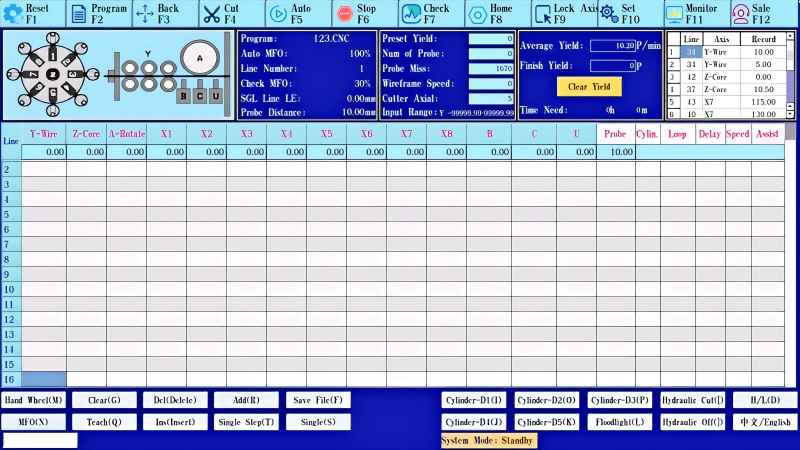
BL‑TP series is equipped with 13‑axis full‑servo control. Multiple motion axes run synchronously following processing programs. Bending‑angle accuracy reaches approx. ±0.2°. Spring‑back compensation further improves batch‑to‑batch forming consistency.
All‑electric structure lowers hydraulic maintenance workload
Compared with classic hydraulic solutions, full‑servo electric drive removes hydraulic‑oil‑related maintenance and leakage risks, keeping production workshops clean. For new‑energy battery and electronic‑component manufacturers, all‑electric design matches trends of automation, clean production and low‑maintenance operation.
Moreover, the machine supports MES system connection, providing interfaces for program management, equipment data acquisition and production traceability. It can be smoothly integrated into digital manufacturing lines for future factory upgrades.
How The Machine Helps Cut Overall Manufacturing Costs
When selecting a copper‑aluminum busbar bending machine, do not only compare purchase prices. Evaluate total manufacturing cost covering labor, change‑over, yield rate, maintenance and equipment utilization.
Reduce manual workload
3D continuous forming cuts manual flipping and repeated positioning. Operators are freed from repetitive labor and focus on loading, quality inspection and production management.
Shorten change‑over preparation time
Fast‑updated new‑energy products require frequent model switching which lowers equipment uptime. Program‑driven processing and flexible feeding structures reduce fixture adjustment work, suiting multi‑spec small‑batch orders.
Improve batch‑production consistency
Servo control, encoder feedback and programmed forming eliminate human‑caused deviations. For busbars with strict requirements on spatial dimension and bending angle, automatic processing stabilizes batch quality.
Suitable Manufacturers for BL‑TP Series
BL‑TP series copper‑aluminum busbar bending machine fits enterprises producing special‑shaped busbars for new‑energy vehicle power batteries, energy‑storage systems, PCS and photovoltaic inverters.
Your projects will benefit most if you have below product features:
• Busbars with coated, film‑covered or extruded insulation layers
• 3D spatial structures including flat bending, vertical bending and twisting
• High requirements for bending‑angle and spatial‑dimension consistency
• Frequent model change‑over with various product specifications
• Demands to reduce manual flipping and secondary clamping
• Ongoing MES or smart‑factory construction plans
The combination of 3D rotary forming and caterpillar‑type feeding perfectly matches these real‑world production workflows.
From Simple Bending Toward Continuous Spatial Forming
Competition in new‑energy busbar manufacturing is shifting from basic bending capability to insulation protection, spatial forming, production tact, precision stability and smart connectivity. Belan Automation BL‑TP series integrates multiple critical processing steps into one continuous production workflow via caterpillar‑type feeding, 3D rotary forming and 13‑axis full‑servo control. It delivers flexible automatic solutions for complex busbar production in new‑energy vehicle, energy‑storage and inverter industries.
Belan Machinery provides professional automotive wire‑forming solutions.
If you are seeking copper‑aluminum busbar bending machine solutions for power battery, energy‑storage, photovoltaic inverter or other new‑energy products, please send product drawings, material grade, thickness, width, bending structures and target output to Belan Automation technical team. We offer process analysis, sample verification and equipment selection to match proper copper‑aluminum busbar bending machine and evaluate processing efficiency, forming accuracy and automation upgrade potential.
.jpg)